
Cloud Accounting Versus Traditional Software: A Decision Guide for 2026
In today’s business environment, speed and precision define success. Clients expect prompt service, teams often operate across multiple locations, and decision-makers depend on current real-time financial data to guide strategy. Traditional bookkeeping and desktop accounting systems struggle to keep pace with these demands. To remain efficient and competitive, many organisations are adopting cloud-based accounting solutions that deliver real-time access, greater accuracy, and improved control over financial management.
Cloud accounting software has changed how companies handle their finances. It lets you manage accounts safely online, work with your team in real-time, and stay compliant, all without being tied to a single office or computer. As 2026 approaches, moving to cloud-based accounting isn’t just an upgrade; it’s becoming essential.
This article explains why this is the ideal time to make the switch, how it differs from traditional systems, and how it can help your business grow faster and more effectively.
- What is Cloud-Based Accounting Software?
- How does Cloud-Based Accounting Software Work in 2026?
- What are the key Features of Cloud Accounting Systems?
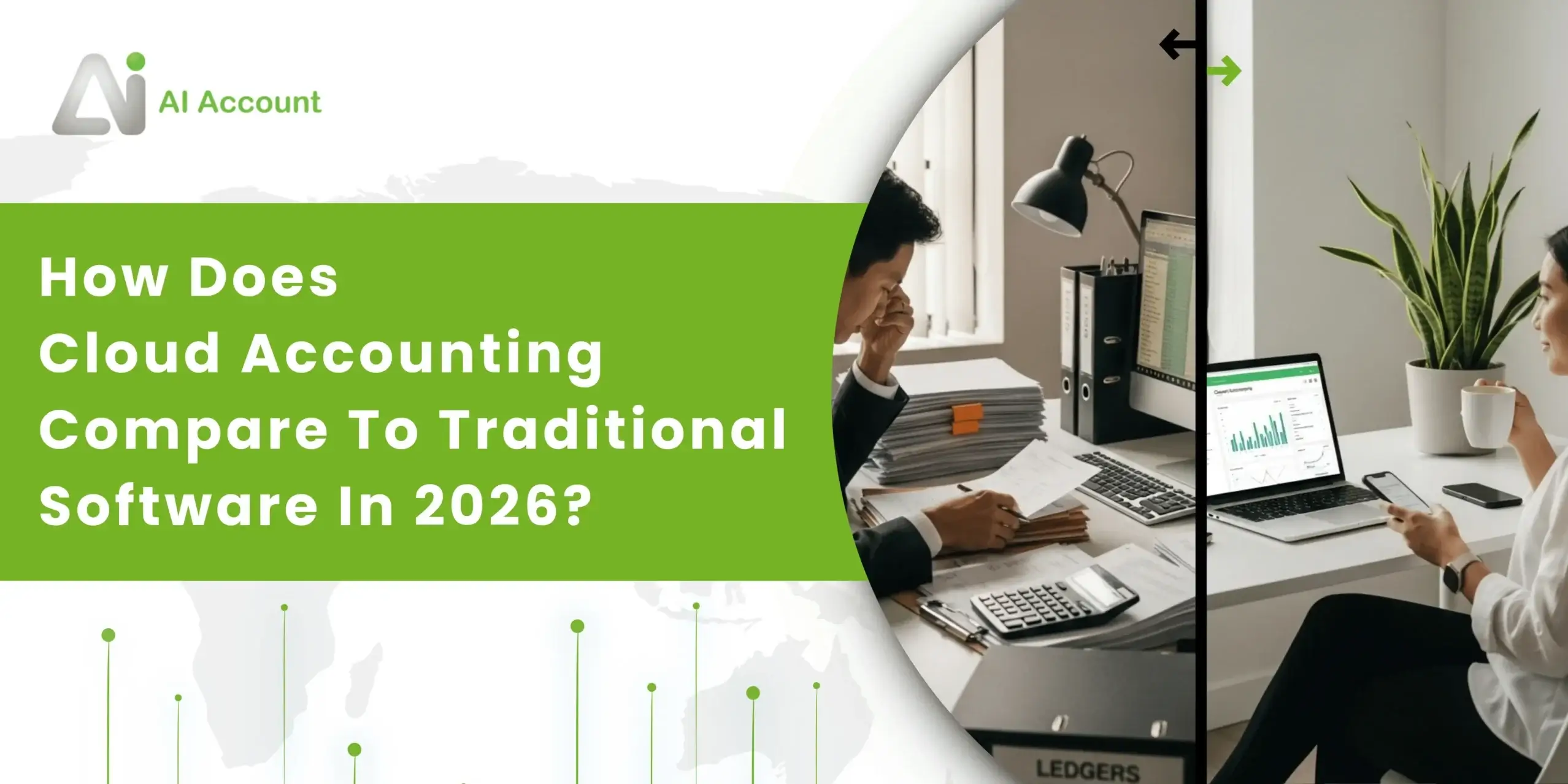
- How does Cloud Accounting Differ from Traditional Accounting Software?
- What Benefits Does Cloud Accounting Bring to Businesses?
- What Types of Cloud Accounting Software are Available Today?
- Conclusion
What is Cloud-Based Accounting Software?
Cloud-based accounting software is an online accounting system that securely stores and processes data on the internet, rather than on a local computer. It allows business owners, accountants, and managers to access financial information anytime & anywhere through remote accounting access, provided there’s an internet connection.
Tasks such as recording transactions, issuing invoices, reconciling accounts, and generating reports can all be completed online through online accounting software without the need to install complex software. The result is a smoother, faster, and more collaborative accounting process.
How does Cloud Accounting Software Work in 2026?
Cloud accounting software works through secure web-based systems managed by professional providers using secure cloud accounting technology. You can log in from your computer or phone to check and update your accounts instantly with real-time financial data.
Data changes are saved automatically, so there’s no need for manual backups. The provider handles updates and maintenance, keeping your software current and reliable without any technical hassle, using modern accounting solutions.
What are the Key Features of Cloud Accounting Systems?
| Feature | What It Means for You |
|---|---|
| Real-Time Access | View financial data anytime, from any device. |
| Automation | Reduce manual data entry and automate bank reconciliation. |
| Integration | Connects seamlessly with payroll, CRM, and banking systems. |
| Collaboration | Multiple users can work simultaneously on the same data. |
| Security | Advanced encryption and regular cloud backups protect your data. |
| Scalability | Systems grow with your business needs. |
How does Cloud Accounting Differ from Traditional Accounting Software?
| Aspect | Traditional Accounting | Cloud Accounting |
|---|---|---|
| Accessibility | Installed on a single computer, restricting access to one device or location. | Accessible anytime, anywhere through the internet, allowing you to manage finances remotely. |
| Updates | Requires manual updates and installations, often leading to downtime or version inconsistencies. | Updates are automatically provided by the service provider, ensuring you always use the latest features without interruption. |
| Data Security | Data loss can occur if the local system crashes or hardware fails. | Information is encrypted and automatically backed up in secure cloud servers. |
| Cost | Involves a significant upfront investment and ongoing maintenance costs. | Operates on a pay-as-you-go model, reducing capital expenditure and improving cost efficiency. |
| Collaboration | Limited to a single user or requires file transfers to share data. | Supports multiple users working simultaneously on the identical financial records. |
| Scalability | Expanding system capacity can be time-consuming and costly. | Easily scales with your business growth, allowing seamless addition of users and features. |
What Benefits Does Cloud Accounting Bring to Businesses?
Switching to the best cloud-based accounting software offers a range of benefits that simplify, accelerate, and enhance the accuracy of financial management.
1. Time Savings
Automation removes repetitive data entry and manual reconciliations.
2. Improved Accuracy
Real-time updates reduce the chance of errors or duplicated entries.
3. Enhanced Security
Data is encrypted and backed up automatically, reducing risks from cyber threats or hardware failures through secure cloud accounting.
4. Better Collaboration
5. Cost Efficiency
6. Regulatory Compliance
What Types of Cloud Accounting Software are Available Today?
Cloud-based accounting software come in various forms, each designed to meet specific business needs and operational scales. Whether you’re a start-up managing basic finances or a large enterprise handling complex reporting structures, there’s a solution suited for every stage of growth. Below is an overview of the main types of cloud accounting software available in the market today.
| Type | Ideal For |
|---|---|
| SME Solutions | Start-ups and small businesses |
| Enterprise ERP Systems | Large corporations |
| Industry-Specific Platforms | Construction, NGOs, Retail |
| Hybrid Systems | Firms transitioning to the cloud |
| AI-Driven Platforms | Advanced automation |
Conclusion
Cloud accounting has become essential for businesses seeking real-time visibility, accuracy, and efficiency in financial management. It replaces manual processes with automation and enables smarter, faster decision-making.
With AIAccount, businesses can simplify accounting, ensure compliance, and access secure, real-time financial insights from anywhere. It is a practical step toward more efficient and scalable financial operations.
Upgrade to Smarter Cloud Accounting Today
Discover how AI Account helps businesses simplify bookkeeping, automate finance tasks, and manage accounts securely in 2026.
Recent Blogs
Singapore Personal Income Tax Calculator 2026: Estimate Your Tax From Income and Resident Tax Brackets
How Unlimited-Usage Pricing Helps Singapore Accounting Firms Add Clients Without Adding Software Costs
How Much Should Accounting Software Cost for a Growing Singapore Firm in 2026?

-
Tommy Teo
(Author)
Frequently Asked Questions
Why is cloud accounting important in 2026?
In 2026, most businesses rely on digital tools for accuracy, automation, and compliance, making cloud accounting a crucial component for achieving efficiency. It also provides anytime access to financial records, improves decision-making, and helps businesses stay competitive in a fast-changing market.
What features should I look for in cloud accounting software?
Key features include automation, integration, real-time reporting, scalability, and data security. Additional features such as invoicing, expense tracking, tax tools, and secure cloud backup can further improve daily accounting operations.
Can I migrate from traditional accounting software to the cloud?
Yes, most providers offer easy migration tools and professional support during the switch. This helps businesses move data securely, reduce downtime, and quickly benefit from a modern cloud accounting system.
Is cloud accounting suitable for accountants and auditors?
Absolutely. It simplifies collaboration, document sharing, and report preparation. It also improves workflow efficiency by offering instant access to records, clear audit trails, and faster reporting processes.
Why are businesses switching to cloud accounting in 2026?
Cloud accounting offers greater flexibility, lower costs, and compliance with digital reporting standards. Many businesses also choose cloud accounting for remote access, automation, and the ability to scale operations as they grow.