
Effortless Accounting for Everyone: How AI Enhances Accessibility

In today’s fast-paced digital landscape, accessibility is paramount in every industry, including accounting. Traditional accounting practices can often be complex and overwhelming, particularly for small business owners and individuals without a financial background.
However, the advent of Artificial Intelligence (AI) is revolutionizing the accounting sector, making it more accessible and user-friendly for everyone.
This blog post explores how AI enhances accessibility in accounting, breaking down barriers and providing solutions that cater to diverse needs.

The Challenges of Traditional Accounting
Before delving into the benefits of AI, it’s essential to understand the challenges posed by traditional accounting methods:
- Complexity: Accounting involves numerous processes, from bookkeeping to tax preparation. For those unfamiliar with financial terminology, these processes can seem daunting.
- Time-Consuming: Manual accounting tasks require significant time and effort, diverting attention from core business activities.
- Cost: Hiring professional accountants can be expensive, particularly for small businesses and freelancers.
- Error-Prone: Human error is a common issue in manual accounting, which can lead to costly mistakes and compliance issues.
Understanding Cloud-Based Accounting Software
What Is Cloud-Based Accounting?
Cloud-based accounting, also known as online accounting software, is a modern way to manage your finances over the internet. Instead of storing financial records on your computer or in physical files, all your data is securely saved on the cloud.
This allows you to access your accounts, track income and expenses, and generate reports from anywhere, at any time, using a computer, tablet, or smartphone.
Key Benefits of Cloud-Based Accounting:
Cloud-based accounting software offers a range of advantages that make managing finances easier, faster, and more accurate for businesses of all sizes. Here are the key benefits:
- Access Financial Data Anywhere: With secure cloud storage, businesses can access their financial information from any location and device, ensuring operational continuity and flexibility.
- Time Efficiency through Automation: Routine tasks such as invoicing, expense tracking, and report generation are automated, reducing manual effort and allowing staff to focus on strategic financial planning.
- Enhanced Accuracy: Automation minimizes the risk of human error in calculations and record-keeping, providing reliable and precise financial data.
- Seamless Integration with Business Tools : Cloud accounting systems integrate effectively with payroll, POS, CRM, and other business applications, ensuring consistency and accuracy across all operations.
- Real-Time Financial Insights : Businesses can monitor cash flow, income, and expenses in real time, enabling informed and timely decision-making.
- Scalable and Flexible Solution: Cloud accounting adapts to the needs of small businesses and large enterprises alike, allowing the addition of features as the organization grows.
- Robust Data Security: Financial data is protected through advanced encryption and regular backups, ensuring confidentiality and compliance with regulatory standards.

How AI Enhances Accessibility in Accounting?
1. User-Friendly Interfaces
2. Automation of Routine Tasks
One of the most significant advantages of AI in accounting is automation. AI systems can handle repetitive tasks such as data entry, invoicing, and reconciliation. This not only saves time but also reduces the likelihood of errors.
For small business owners, this means they can focus on growth and strategy rather than getting bogged down by administrative tasks.
3. Real-Time Financial Insights
AI-driven accounting tools provide real-time data analysis, allowing users to monitor their financial health continuously.
Dashboards display key performance indicators (KPIs), cash flow, and other critical metrics in an easily digestible format. This accessibility to real-time insights empowers users to make informed decisions quickly.
4. Enhanced Data Security
Security is a crucial concern in accounting, especially when handling sensitive financial information. AI enhances accessibility by incorporating advanced security measures, such as encryption and biometric authentication.
These features ensure that users can manage their finances with confidence, knowing that their data is protected.
5. Personalized Support through Chatbots
6. Integration with Other Tools
Modern AI accounting solutions often integrate seamlessly with other business tools, such as customer relationship management (CRM) systems and project management software.
This interconnectedness allows users to streamline their operations and access all necessary information from a single platform, reducing complexity.
7. Cost-Effectiveness
AI solutions are generally more affordable than hiring a full-time accountant or outsourcing to a firm. Many AI-powered tools operate on a subscription model, allowing users to choose a plan that fits their budget.
Cost-effectiveness makes professional accounting services accessible to a broader audience, including freelancers and small business owners.
8. Educational Resources and Training
Conclusion
The integration of AI in accounting is a game-changer, making financial management more accessible and efficient for everyone.
By simplifying complex processes, automating routine tasks, and providing real-time insights, AI is breaking down barriers that have traditionally hindered individuals and small businesses from effectively managing their finances.
As technology continues to evolve, the future of accounting will undoubtedly become even more inclusive, allowing everyone to achieve effortless accounting. With expert guidance from AI Account, adopting an AI-powered accounting solution becomes simple, accurate, and worry-free.
Upgrade to Smarter Accounting Today
Recent Blogs
Cloud Accounting Software: A Complete Guide for Businesses in 2026
Cloud or Desktop Accounting Software: A 2026 Guide

-
Tommy Teo
(Author)
Frequently Asked Questions
1. What is AI in accounting?
2. How does AI improve accessibility in accounting?
3. Can small businesses benefit from AI accounting tools?
4. Is AI in accounting secure?
5. Do I need accounting knowledge to use AI accounting software?
6. What are some examples of AI accounting tools?
7. How does AI help with financial forecasting?
8. What is the future of AI in accounting?
9. Are there any challenges associated with AI in accounting?
10. How can I choose the right AI accounting tool for my business?
Related Blogs
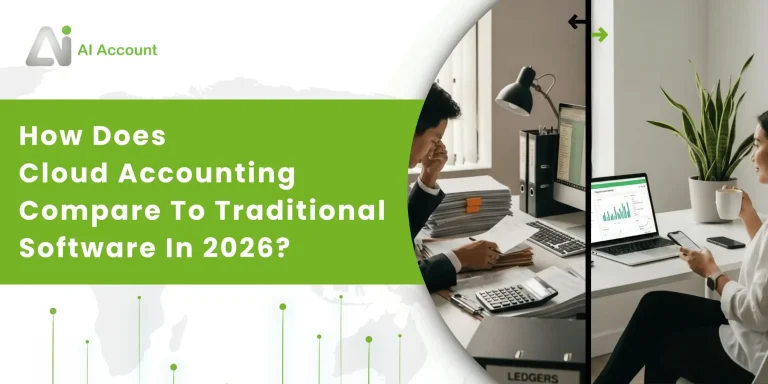
How Does Cloud Accounting Compare to Traditional Software in 2026?
How AI Accounting Software Can Help Scale Your Growing Business

The Future of Accounting: Embracing AI for Personalized Service
The accounting landscape is undergoing a transformative shift with the

A User-Friendly Approach to Tailored Financial Solutions
In the rapidly evolving financial landscape, AI Account Software has